Buying Advice to Sliding Doors
Innovative Sliding Door Solutions for Tight Areas: Expand Your Living Area
Creative sliding door options provide significant benefits for making the most of limited spaces. By removing the requirement for door swing space, these doors offer unobstructed pathways between areas. Choices such as pocket doors and bypass doors improve space efficiency while adding materials such as glass boosts natural illumination and a sense of openness. As urban living spaces continue to shrink, understanding the various types and features available becomes essential for effective design. What specific solutions can transform a compact area into a functional haven?
The Advantages of Sliding Doors for Small Spaces
Sliding doors provide numerous benefits especially ideal for compact areas. Their design allows for effortless movement between living areas without requiring extra floor area for swinging open. This characteristic proves especially advantageous in smaller rooms where every square foot counts. In addition, sliding doors are capable of improving natural light flow, creating an illusion of a more open and spacious area.
A wide range of sliding door designs incorporate glass panels, which not only enhance the brightness of interior spaces but also foster a seamless visual flow between inside and outside areas. Moreover, sliding doors offer customization options to fit a wide range of decorative tastes, giving homeowners to preserve their personal aesthetic while making the most of space.
Additionally, they commonly feature with efficient hardware that minimizes clutter, additionally boosting the space's overall functionality. Overall, sliding doors represent an practical option for smaller rooms, blending functionality with modern aesthetics to maximize usability and aesthetic appeal.
Picking the Best Type of Sliding Door
When picking out the perfect sliding door for a compact space, certain considerations are important. To begin, the door's size and configuration are essential. A pocket-style sliding door, which retracts into the wall, can save floor space and enhance accessibility. Alternatively, bypass doors slide alongside each other, making them suitable for narrower openings.
Furthermore, the design of the door should enhance the overall decor of the room. Selections vary from timeless to cutting-edge designs, giving homeowners the ability to coordinate the door with their home's style. Additionally, practical features also matter; certain doors provide improved insulation or noise-reduction capabilities, proving advantageous in rooms serving multiple purposes.
Lastly, installation and maintenance ease plays a significant role. Property owners should assess whether professional installation is needed and what level of upkeep the door will entail. Through assessing these aspects, individuals are able to find a sliding door that enhances both functionality and visual appeal.
Contemporary Materials for Sliding Doors
Material choice greatly impacts the performance and visual appeal of contemporary sliding doors. Contemporary options include metal, glass, wood, and composite materials, each providing distinct advantages. Glass sliding doors, for instance, enhance natural light and create a sense of openness, making them ideal for small spaces. These doors can be framed using aluminum or wood to enhance durability and aesthetic appeal.
Timber delivers a cozy appeal and can be customized in numerous stains and finishes, giving a timeless look that suits classic interior spaces. Metal doors, commonly constructed find guide with aluminum or steel, offer strength and security while preserving a sleek, modern appearance.
Blended materials combine the best aspects of natural wood and synthetic alternatives, offering durability against moisture and structural warping. This range enables homeowners and designers to choose sliding door options that suit their individual tastes and functional needs, successfully enhancing space efficiency and visual appeal in space-conscious residential settings.
Effective Space-Saving Strategies With Sliding Doors
A well-placed sliding door can significantly improve the functionality of small spaces. By removing the requirement for swing space, sliding doors create more usable area, making them perfect for tight areas. Choosing a pocket sliding door can additionally maximize your floor plan, as it disappears into the wall when opened, maintaining an open floor area.
Incorporating mirrored sliding doors can provide the appearance of additional space while supplying necessary storage space. For narrow hallways or entryways, a rustic barn-style sliding door can add charm without compromising room dimensions.
To enhance flexibility, consider multifunctional sliding door systems that divide living spaces while accommodating open-plan living when needed. Moreover, utilizing lighter materials can simplify door movement, guaranteeing seamless transitions. Such useful strategies can transform small spaces into efficient, elegant settings, proving that effective design does not require vast square footage.
Intelligent Features for Privacy and Natural Light
How can smart features enhance privacy while allowing natural light to flow through sliding doors? Modern sliding doors equipped with smart technology offer innovative solutions for achieving both. Glass panels may include variable opacity settings, enabling users to transition from clear to frosted with a simple button press. This feature confirms that natural light fills the room while upholding privacy whenever necessary.
Moreover, smart window coverings, such as automated blinds or shades, can be set up to adjust based on the time of day or occupancy, offering greater flexibility and convenience. Smart sensors can monitor ambient light levels, adjusting the opacity or shading to enhance both privacy and natural light. Furthermore, integration with home automation systems allows homeowners to control these features remotely, boosting both security and comfort. Such developments not only enhance the functionality of compact spaces but also contribute to a harmonious balance of light and seclusion.
Sliding Door Care and Installation Guidelines
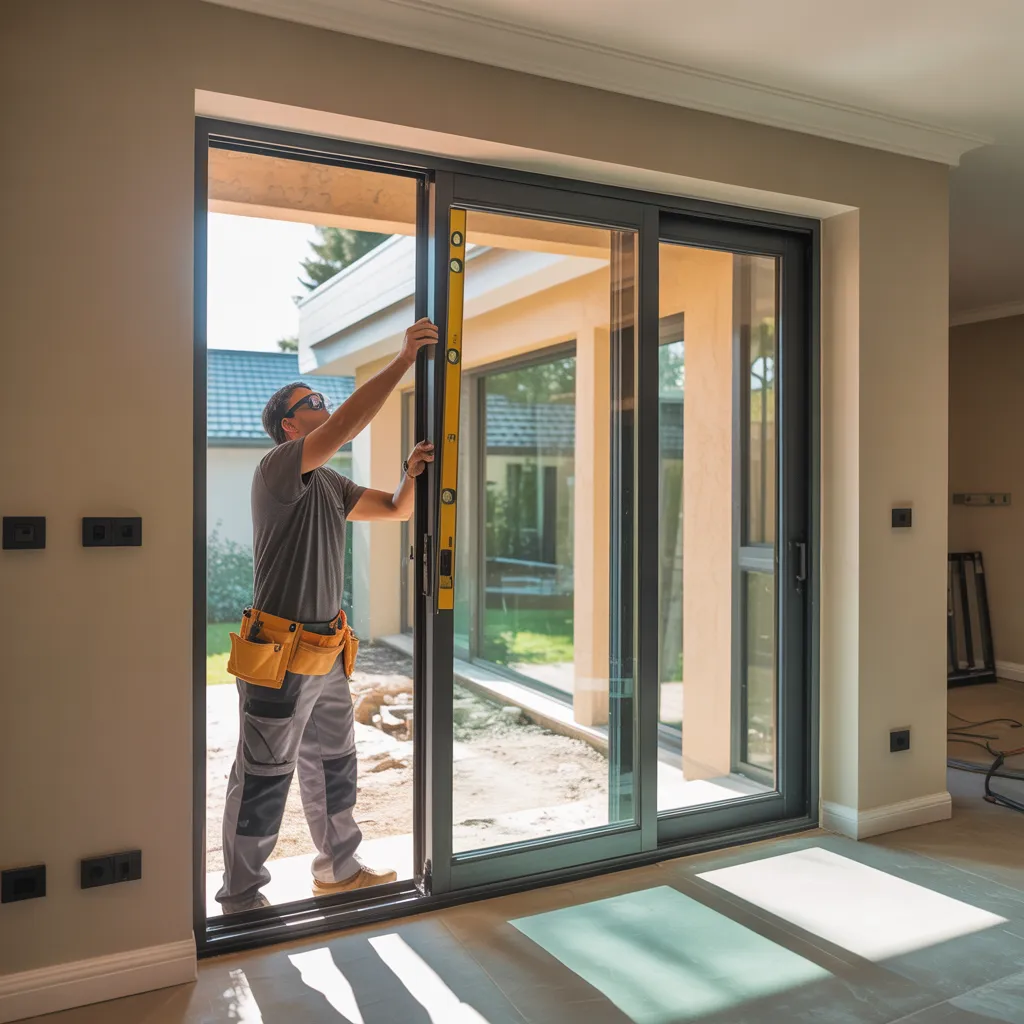
Effective installation and care of sliding doors can considerably extend their lifespan and efficiency. Proper installation begins with accurate measurements to guarantee a snug fit within the frame. It is crucial to level the track and securely attach it, which prevents future operational issues. Routinely examining and washing the tracks is vital; grime and residue can impede movement. Coating the rollers and tracks with silicone spray aids in sustaining fluid performance.
To maintain performance, examining the door seals regularly can prevent drafts and moisture intrusion. Additionally, addressing any scratches or dents in a timely manner keeps the door looking its best. Should the door fall out of alignment, adjusting the rollers can correct the problem. Homeowners should also examine the locking mechanisms to guarantee that security remains intact. By following these installation and maintenance tips, individuals can maximize the efficiency and lifespan of their sliding doors, rendering them a worthwhile enhancement for limited spaces.

Commonly Asked Questions
Can Sliding Doors Increase Your Home's Energy Efficiency?
Sliding doors have the potential to boost home energy efficiency by providing better insulation and reducing air leakage. Premium sliding doors, equipped with energy-efficient glass, work to sustain interior temperatures, effectively reducing heating and cooling expenses for homeowners.
Do Sliding Doors Pose Any Safety Risks for Children and Pets?
Sliding doors can create potential dangers for children and pets due to their glass construction and potential for accidental opening. That said, safety measures including tempered glass and reliable locks can reduce these risks considerably.
How Do I Clean Sliding Door Tracks Effectively?
To wash the tracks of sliding doors thoroughly, one should start by clearing away debris using a vacuum or brush, then use soapy water and a cloth to scrub the sliding tracks. Thoroughly rinse and dry to avoid future debris accumulation.
What Is the Expected Lifespan of a Sliding Door?
The typical lifespan of a sliding door usually spans between 20 and 30 years. Elements that affect longevity encompass material quality, upkeep, and environmental conditions, all of which have a considerable impact on the door's overall lifespan.